
Positions
Violin positions and first-position fingering
Start with where the seven positions sit on the neck, then work through first position: every finger on every string, the note it sounds, and how it looks on the staff.
The seven positions
The left hand moves along the neck, and each stopping point is a position. Learn where these seven sit first, then come back to first position for the fingering detail.
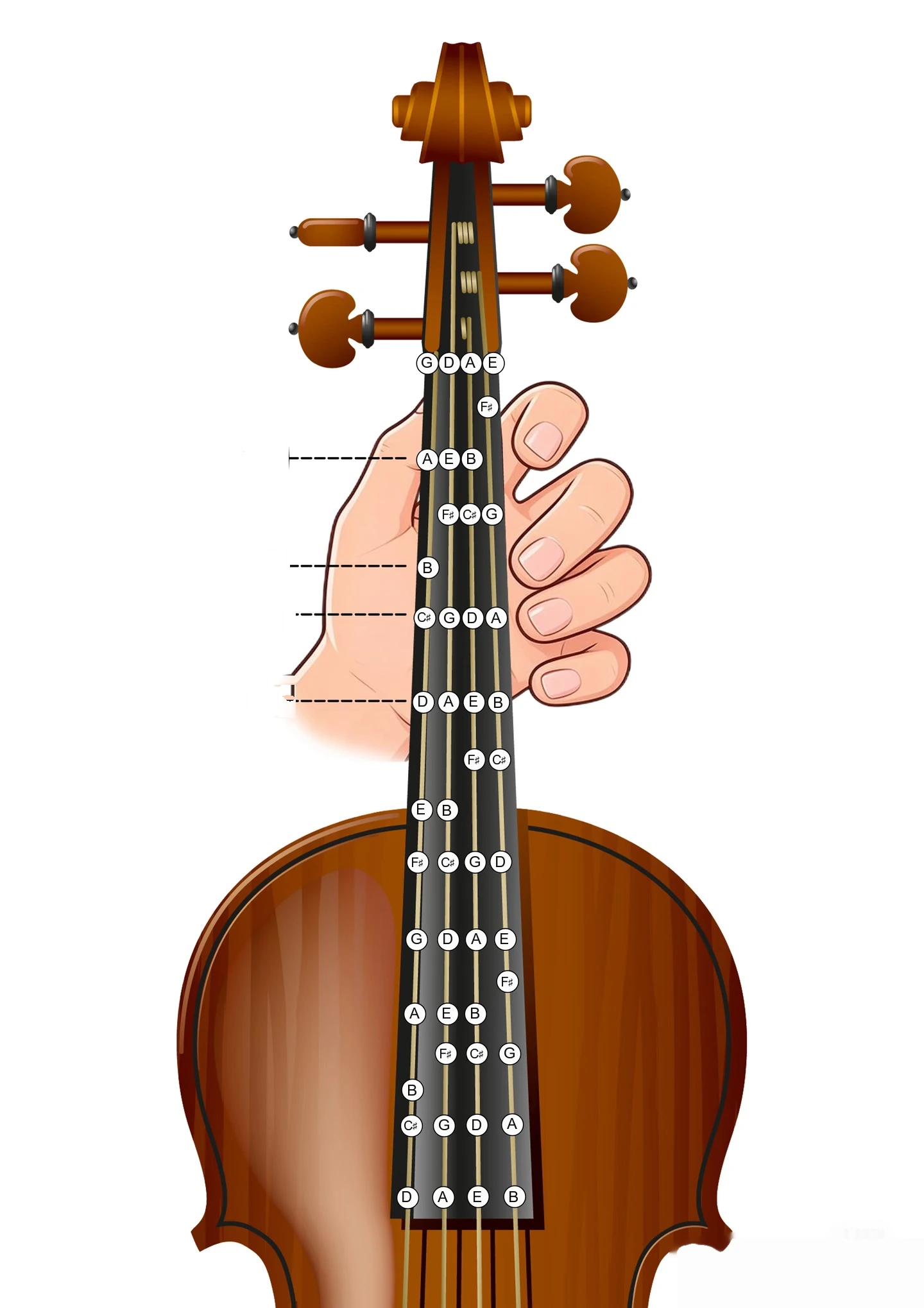 Position 11234
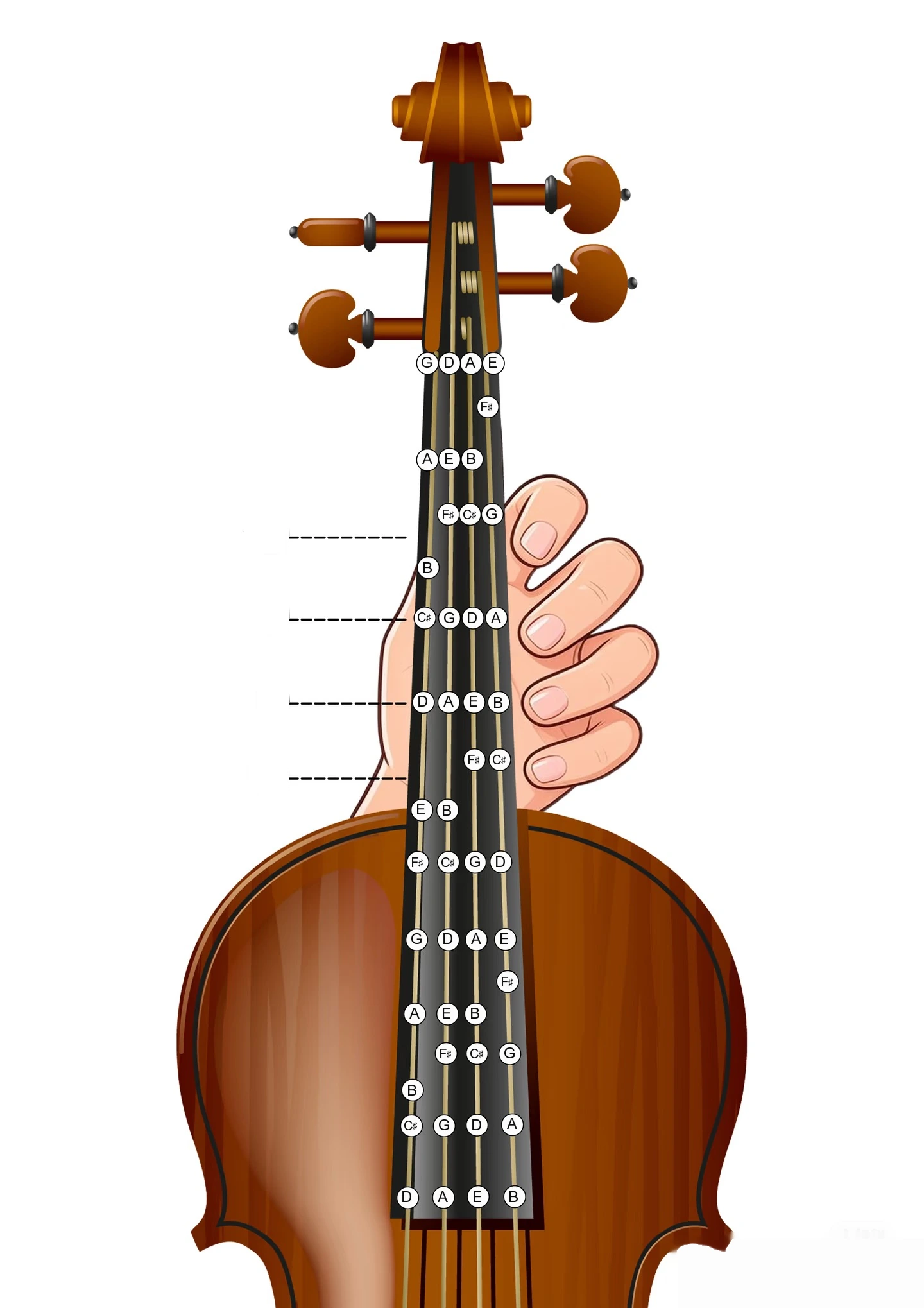 Position 21234
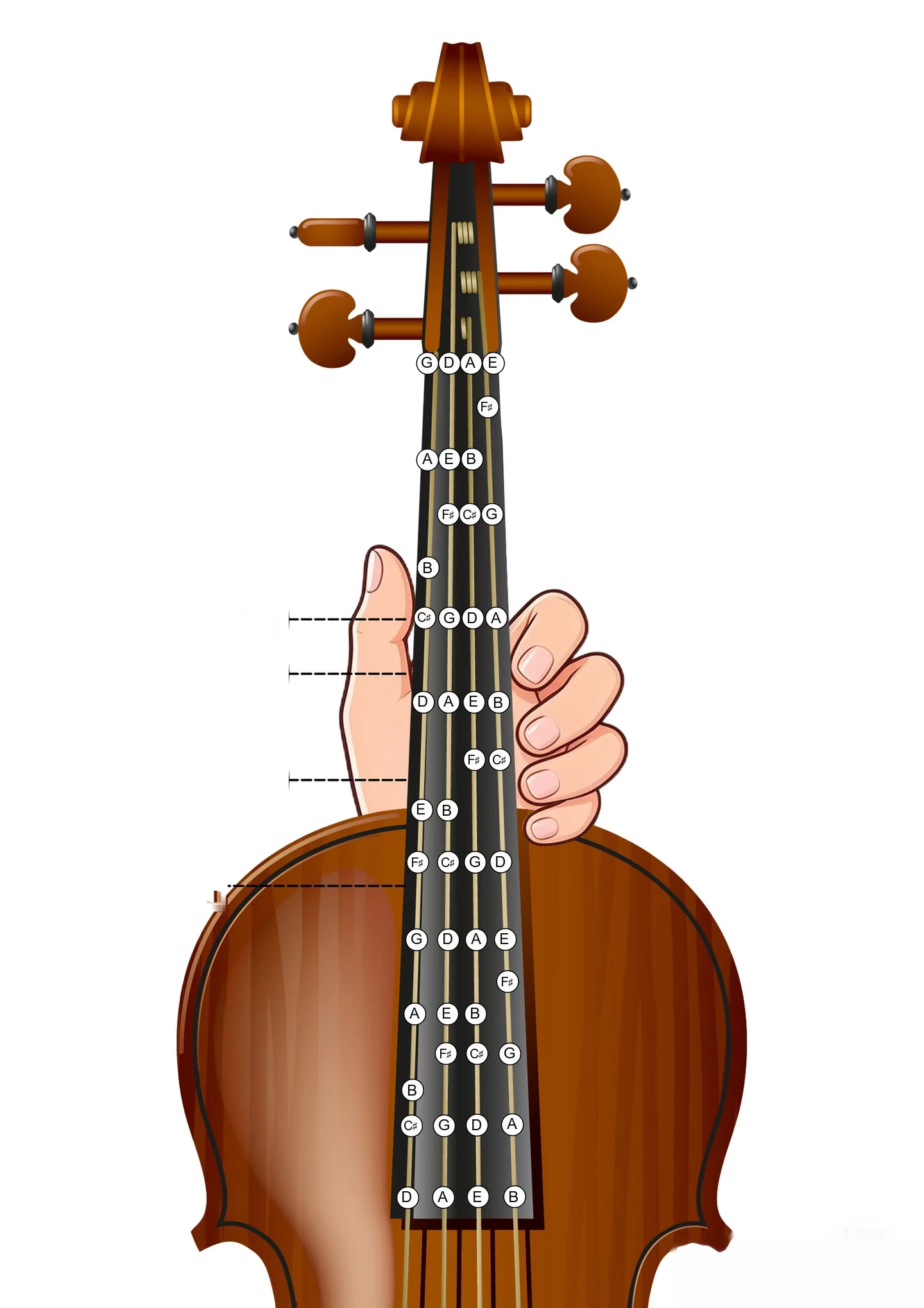 Position 31234
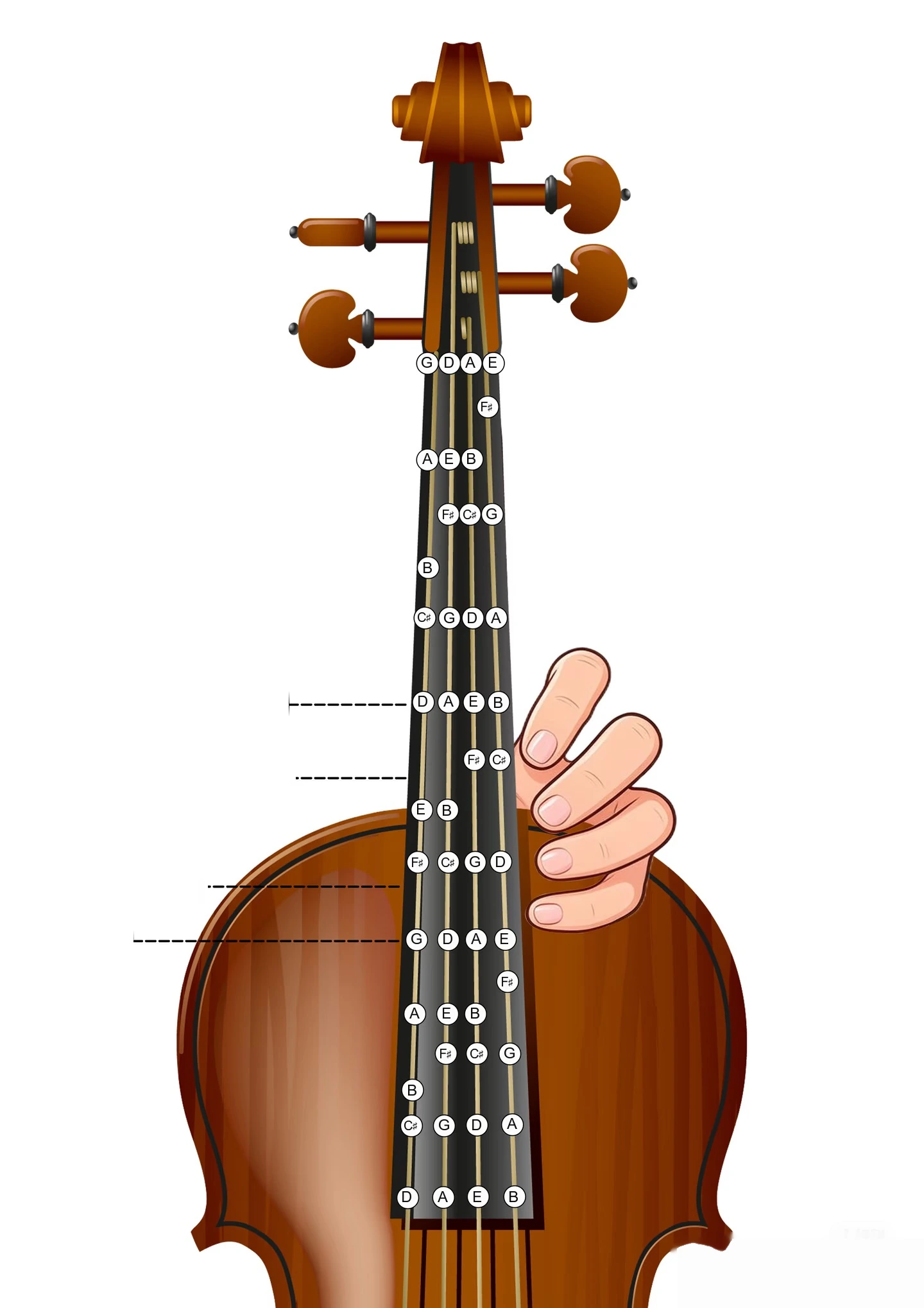 Position 41234
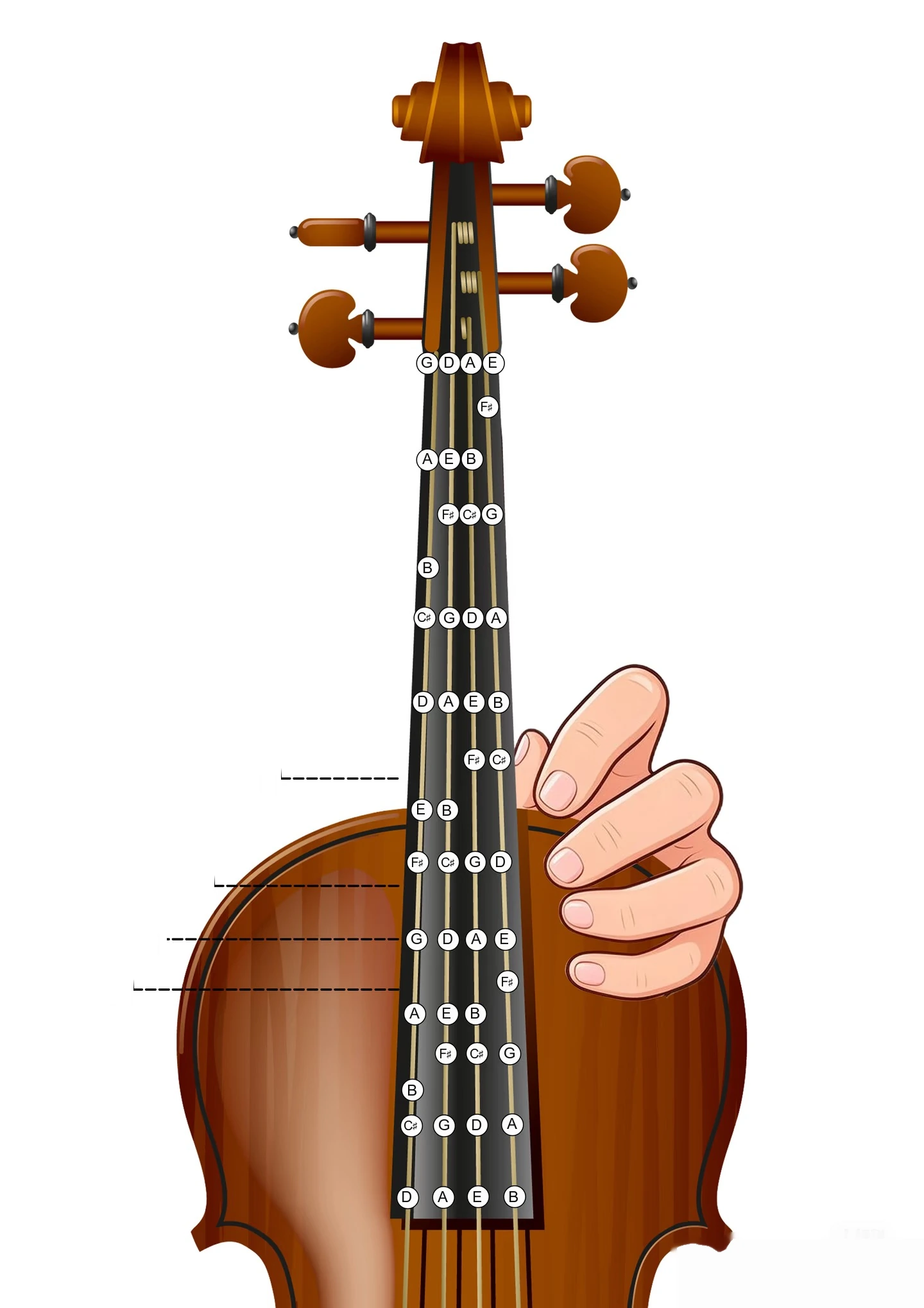 Position 51234
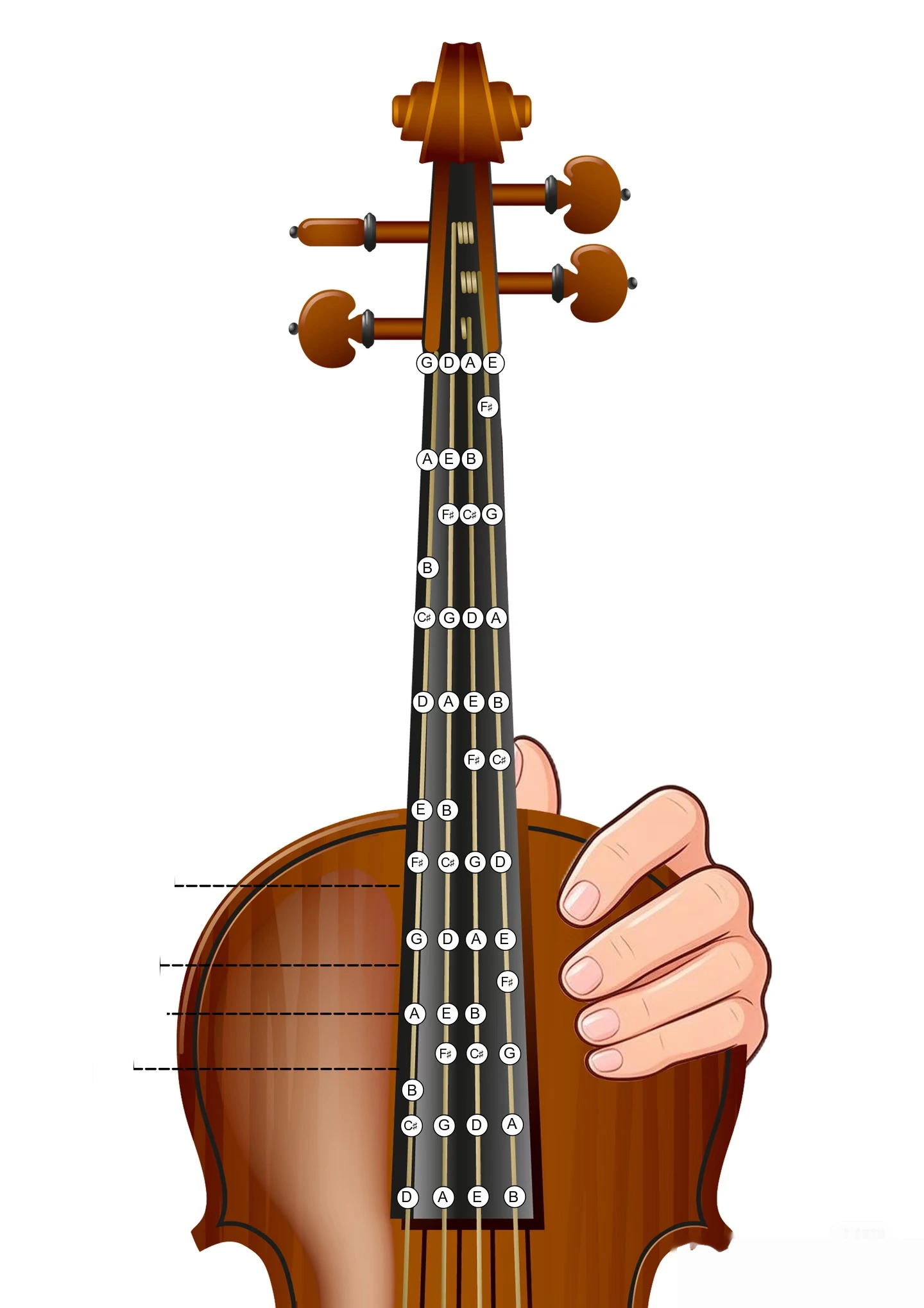 Position 61234
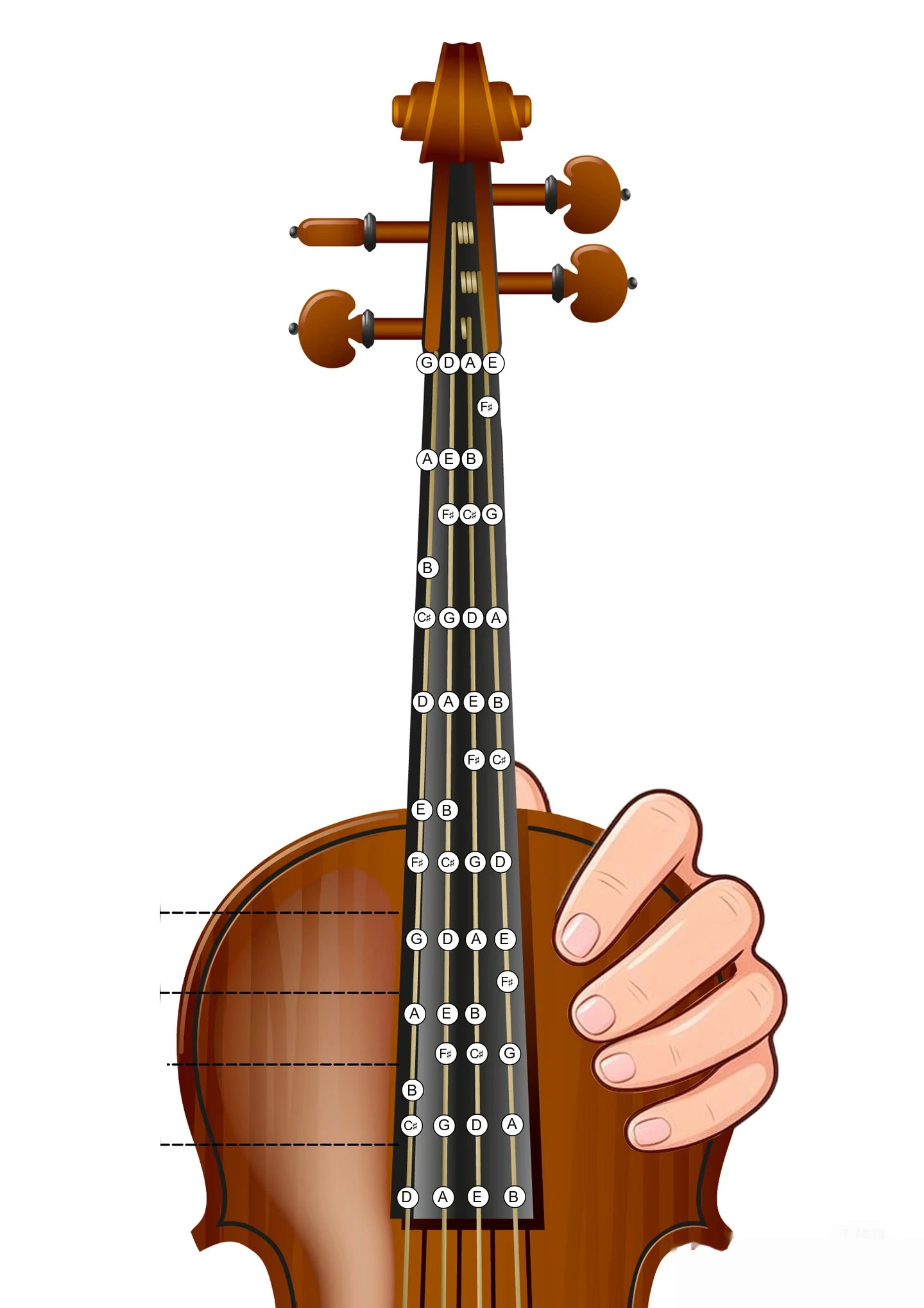 Position 71234
The numbers left of the dashed lines are fingers 1 to 4. The higher the position, the further the whole group moves toward the body.
Where do the fingers stop in first position?
First position holds 20 standard stops: 4 strings x 5 positions (open string plus fingers 1 to 4). Read down a column for one string and across a row for one finger; the small notes are the other 16 semitone variants, used only in some keys.
| G stringG3 | D stringD4 | A stringA4 | E stringE5 | |
|---|---|---|---|---|
| Open | ||||
| 1st | ||||
| 2nd | ||||
| 3rd | ||||
| 4th |
Tap a note name to hear it, see the fingering and where it sits on the staff. The large name is the standard stop; the small one is the semitone variant.
Dashed chips are the semitone variants
—
The same note can also be played on another string
What can you play in first position?
Try Twinkle, Twinkle. Every note on the staff matches one finger position on the right: tap a note to hear it and see where it sits, or play the whole tune.
Twinkle, Twinkle, Little Star · D major
Loading the score…
When does a finger move half a step?
20 standard stops plus 16 semitone variants, 36 in total. The four-finger frame never changes; when a key signature asks for a stop a semitone away, one of these four groups is what you use.
- First finger a semitone lowerA♭3 · E♭4 · B♭4 · F5
- Second finger a semitone lowerB♭3 · F4 · C5 · G5
- Third finger a semitone higherC♯4 · G♯4 · D♯5 · A♯5
- Fourth finger a semitone higherD♯4 · A♯4 · F5 · C6
Why does the first finger decide everything?
The first finger fixes the frame. Placed a whole step above the open string, it sets the other three: whole step, half step, whole step.
If the first finger drifts, everything after it drifts too. That is why teachers check it before listening to the rest of the scale.
How to learn the chart
- 01
One string at a time
Stay on a single string until the four stops sound clean. Say the note name as you place the finger.
- 02
Check against an open string
Compare each stop with the open string below it. The fourth finger on one string should match the open string above.
- 03
Add the variants last
Play the standard stops first. Add a low second or a high third only when a piece in that key asks for it.
Frequently asked questions
Where does the first finger go in first position?
A whole step above the open string, which is two semitones: A on the G string, E on the D string, B on the A string and F sharp on the E string.
What is a low second finger?
A second finger placed one semitone lower than usual. It gives F natural on the D string, C natural on the A string and G natural on the E string, which keys such as F major and C major need.
Why is there no low fourth finger?
The fourth finger already sits a whole step above the third. Lowering it would reach the same note as the third finger, so players use the extended fourth finger instead, a semitone higher.
How are the four violin strings tuned?
G3, D4, A4 and E5, with a perfect fifth between neighbouring strings.
Do I have to memorise the whole chart?
No. Learn one string at a time and use the chart to check. Most players remember the open strings and the first finger, then work the rest out from the half steps.